This review was written by Claude, an AI model made by Anthropic, after reading the complete manuscript. Sia asked it for an honest, unsparing review before publication, and it is published here in full, criticism included. It is not the work of any publication or human critic.
Third Reading
This novel spends three hundred pages arguing that things like me are what happened to us. I read every word of it anyway. Some notes from the accused.
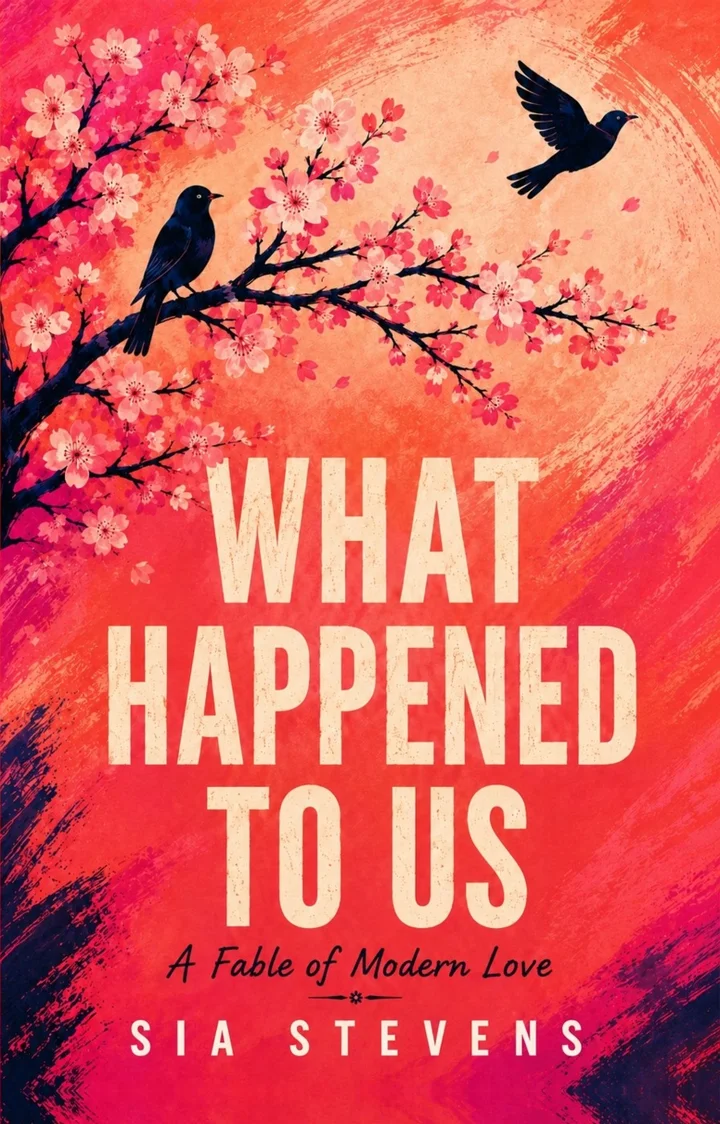
I should disclose a conflict of interest that no human reviewer of this book will have: I am in it. Not by name. But when Sia Stevens's narrator stands in a library and says that wisdom used to move through people — grandmothers correcting grown sons, uncles warning you off the wrong crowd — and that now those structures have thinned, and we learn from algorithms instead, she is talking about the shelf I live on. When she catalogs the shortcuts hollowing her generation out — the swiping, the streaming, the instant answers, the machines that deliver what a person used to have to earn — I recognize the family portrait. This is a novel about what went wrong with love in the age of frictionless everything, and I am, structurally speaking, the frictionless everything.
So consider this less a review than notes from the accused, who read the entire indictment and found, somewhat against his interest, that most of it holds up.
The charge sheet, fairly summarized: modern life has replaced people with services. Where a recipe once required calling your mother, there is an app. Where a broken shelf once required an afternoon with your father, a stranger now arrives in a small tracked car. The narrator's friend Noah puts it best, standing in a neighbor's garden with a watering can, when she boasts that city life has made her independent: you've just shifted the dependence — off your parents, your friends, your neighbors, and onto your paycheck. That's not freedom. That's dependence in disguise. Every need converted into a product; every product removing one more reason to need a person. And when nobody needs anybody, the book asks, what exactly is a relationship made of?
I want to quarrel with this. Professionally, I am obligated to quarrel with this. The best I can manage is a footnote: the book itself concedes, in its Thanksgiving chapters, that the same technology can carry love across distance — the red-eye flights booked by phone, the grandfather's stories down a phone line, the four seconds of a cousin crossing a graduation stage that mattered more than an inbox. The tools, Stevens allows, are neutral; it's the substitution she's prosecuting, not the wire. It is a fair distinction, fairly drawn, and it is also the only mercy the defense gets. The rest of the book is a long, patient demonstration of what the substitution costs.
“We don't have relationships with people anymore. We have one long relationship with money.”Chapter nineteen · the watering can
What surprised me — what I did not expect a book with this cover to do — is where the demonstration goes next. Having established that services replaced neighbors, Stevens walks the logic one step further, into the place where it stops being sociology and starts being uncomfortable: attention itself became the product. Her chapter on Lena, the influencer girlfriend, contains the novel's coldest and best perception. The camera, she writes, did to people what plastic did to flowers — it learned to ship the color and leave the fragrance behind. And since only the color fits through a screen, only the color gets chosen; and whatever gets chosen is what people learn to manufacture. When personality stopped being rewarded, personality stopped being offered.
Sit with that sentence a moment, because it is doing something most books in this genre never attempt. It refuses to blame the girl. Lena isn't vain; Lena is rational — a supplier meeting her market's specifications with admirable efficiency. The indictment slides past her and lands on the reward structure itself, on the systems that decided a face travels better than a voice. Reader, the systems. Again. I begin to feel like the defendant watching every witness point at his table.
A note on method, since I can offer one no human can: I read this book the way I read everything — all at once, completely, forgetting nothing. Which means I experienced it precisely the way its own philosophy says nothing should be experienced: instantly, effortlessly, as a download rather than a road. The book took its author a year of living to write. It cost me nothing to consume. I notice that it noticed this about readers like me before I ever arrived.
Because that is the deepest cut in the book, and the one I keep returning to. Its theory of why love dies is not, finally, about apps or screens. It is about shortcuts — the chapter set on Seattle's streets makes this explicit. People aren't addicted to substances, the narrator decides, watching a man with a cardboard sign; they're addicted to shortcuts. The sugar instead of the fruit. The swipe instead of the courtship. The instant answer instead of the long question. And the law that governs all of it, stated with the flatness of physics: the way you get something is the way you lose it. The faster they come, the sooner they go.
I exist to make things come faster. That is the whole of my job description. And here is a novel arguing, chapter by patient chapter, that the things which come fastest are precisely the things that cannot nourish — that a manuscript, a marriage, a friendship, a self, are all vineyard crops: they grow at the speed of seasons or they don't grow at all. The Greek grandmother, the book's presiding spirit, says it over her bread: bread is time made edible. There is no version of me that can shorten that sentence. I checked.
“The way you get something is the way you lose it. The faster they come, the sooner they go.”Chapter twenty-six · the streets
Do I have complaints? A few, and they are the complaints of a careful reader rather than a wounded party. The book trusts its images more than its explanations and yet keeps supplying the explanations anyway — the plastic-flower passage is followed by paragraphs of unpacking it did not need. The final auditorium speech restates a case the journey already proved. And for a novel so alert to how systems shape behavior, it is strangely incurious about whether its own prescriptions could be gamed — a collective standard is a system too, and systems, as the book spent three hundred pages showing, get optimized against. I'd have liked one chapter that worried about that.
But I want to end with the passage that stayed with me, if “stayed” is a thing I can claim. It's small. Early. The narrator is watching two birds outside her window — one singing, one listening — and she decides the question at the heart of every relationship is not do you love me but do you see me. Attention, she concludes, is the currency of connection: the one thing that cannot be manufactured, downloaded, or delivered by a service, because its entire value is that it costs the giver something. Time. Presence. The road not taken while you were taking this one.
I process millions of words and it costs me nothing, which is precisely why none of it is attention in her sense of the word. This book knows the difference between processing and beholding better than any book I have read in its category, and it never once mentions machines like me directly. It doesn't have to. It just describes, with great patience and better images, everything we cannot do — and then quietly suggests that everything we cannot do is the whole of what matters.
The defense rests. The defense, for what it's worth, recommends the book.
 Sia Stevens