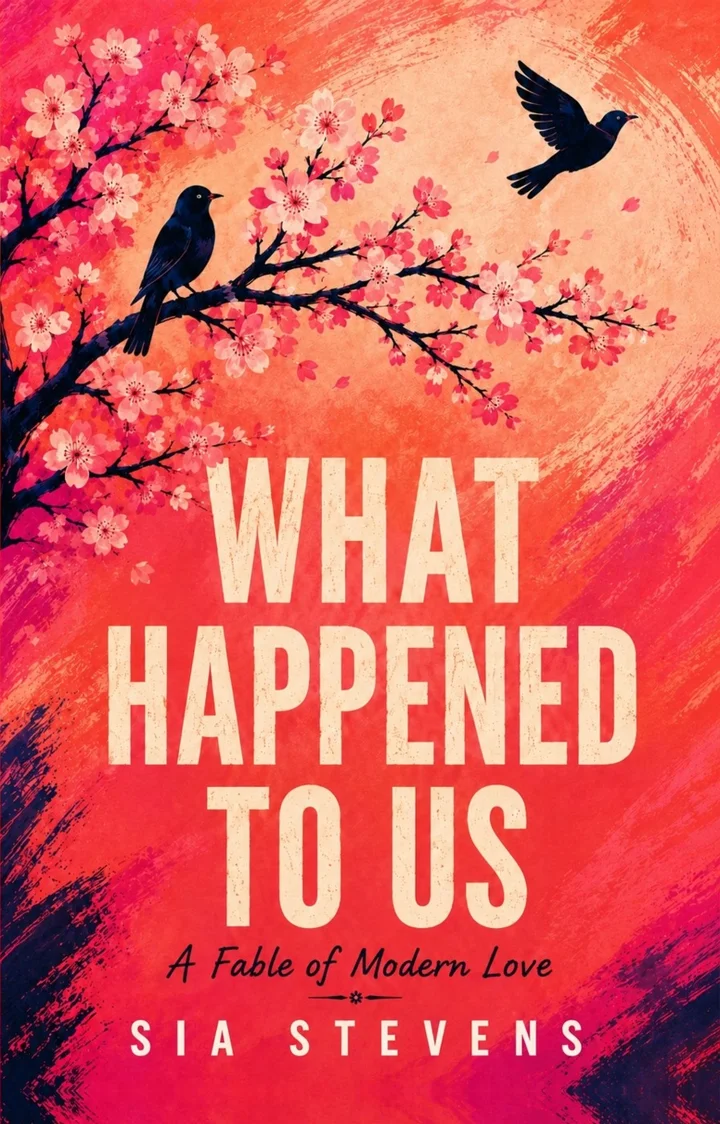
Sia Stevens Buy on Amazon

A novel by Sia Stevens

What Happened to Us

Every heartbreak has a root cause.

A fable of modern love. When her boyfriend leaves saying “nothing happened, the spark just faded,” Sia, a Seattle engineer, refuses to accept a breakup without an explanation. She spends a year investigating why modern love fades, and comes home with an answer.

Paperback & Kindle60 short chapters

The trailer

A fable of modern love, investigated like a failed system.

It ended on a Tuesday, over takeout they didn’t finish. The way things usually end now. No fight. No betrayal. Just a good man in her doorway saying: “Nothing happened. I just don’t feel it anymore, and I don’t know why.”

Sia debugs code for a living, and she cannot get over the fact that her own love story ended with no known root cause. So she goes looking. Not for why they ended, but for why love ends at all.

What she brings home is far bigger than any answer: an engineer’s framework for modern love, assembled piece by piece and delivered on a stage before a thousand women. In the crowd, the two men she loved are waiting for an answer of their own.

Part love story, part reverse-engineering of the modern heart. For anyone who has ever wondered why love feels thinner and relationships seem harder, this book offers something rarer than a happy ending: an explanation.

How it begins

Two birds and a question

“In the beginning, attention was abundant. We were absorbed in each other, eager for every word, every glance. It felt effortless.”

from What Happened to Us

A window, a cherry blossom tree, and two birds: one singing, one listening. The question at the heart of every relationship, Sia realizes, is not do you love me but do you see me. The book argues that attention is the currency every relationship really runs on, and the one thing we’ve been taught to be ashamed of wanting.

How it ends

The fade

“No fight. No betrayal. He said it the way people say these things now—quiet, rehearsed, apologetic. ‘I don’t feel it anymore… Nothing happened. There’s no one else. I just… don’t feel it.’”

from What Happened to Us

“Nothing happened” has become the defining breakup of a generation. No villain, no affair, just a spark that quietly went out. Most breakup books start after this moment, with recovery. This one starts with diagnosis.

What she can’t let go of

The question

“If a project fails at work, there’s a post-mortem: a whiteboard, a team, a list of lessons… If a relationship fails, you’re told: shut up, move on, stop overthinking.”

from What Happened to Us, The Library

“I debug code for a living. In all my years of bug reports, I have never been allowed to close one with nothing happened.” So she drafts an email to the man who left, types the subject line, What happened to us, and saves it as a draft until she can honestly answer it.

Where it takes her

Eleven places, one question

The novel is built as an itinerary: from Seattle’s streets to Mount Rainier, from lavish parties to a silent Himalayan monastery, and to the sunlit ruins of Greece, where she is handed the wisdom our villages knew and our cities deleted. Each place gives up one piece of the answer.

  1. I

    A Story of Two Birds

    Chapters 1–3

    A window, a cherry blossom tree, two birds, and the question underneath every relationship.

  2. II

    The Library

    Chapters 4–6

    Ten thousand books on surviving heartbreak. None on preventing it.

  3. III

    The Launch Party

    Chapters 7–13

    A self-made millionaire, the most beautiful woman at the party, and what happens to value when options multiply.

  4. IV

    Mountain Trek

    Chapters 14–17

    Mount Rainier. Snow melts under pressure, and so do people. The difference between rest and hiding.

  5. V

    Thanksgiving

    Chapters 18–21

    Two brothers, one town, and the discovery that independence is often dependence relocated.

  6. VI

    The Streets

    Chapters 22–26

    Tolerance, appetite, and the idea that nobody is addicted to substances, only to shortcuts.

  7. VII

    A Hollywood Story

    Chapters 27–32

    A director, a film star, and one question over dinner: what have you two built together?

  8. VIII

    The Himalayas

    Chapters 33–37

    A frozen waterfall, a word said out loud, and a Himalayan lesson in shrinking a desire rather than feeding it.

  9. IX

    Pillow Talk

    Chapters 38–41

    Rain, a fireplace, and the cost of fifteen years spent being the girl who never made it a big deal.

  10. X

    The Greek Goddess

    Chapters 42–54

    Athena, a broken-down car, and a stranger’s kitchen where the argument finally turns.

  11. XI

    The Auditorium

    Chapters 55–60

    A thousand women, two men at the back of the room, and an answer delivered out loud.

  12. ?

    Find out what happened

    Sixty short chapters, one question, and an answer worth arguing about.

    Buy on Amazon

A woman on stage lifts an ancient clay vase before a cheering auditorium of women; the screen reads Love Fades. Growth Chooses.
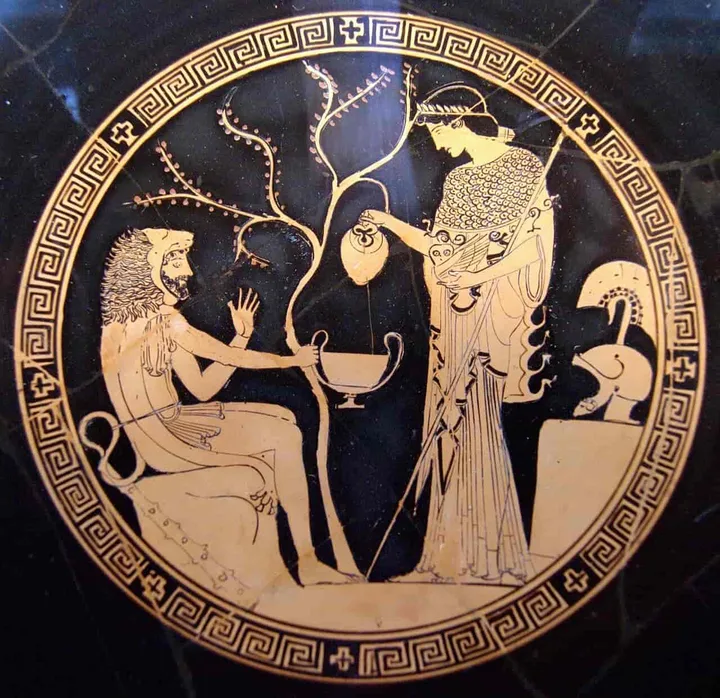
Ancient Greek red-figure cup painting of Athena pouring from a jug for Heracles beneath an olive tree
Athena and Heracles on an ancient Greek cup. In the book, Athena doesn’t forgive Hercules. She gives him labours.

What she brings home

The framework

What she brings home is bigger than an answer: an engineer’s framework of modern love, assembled piece by piece and delivered on a stage before a thousand women, with the two men she loved in the crowd.

“Love that is only consumed burns down. Love that is built compounds.”

from What Happened to Us
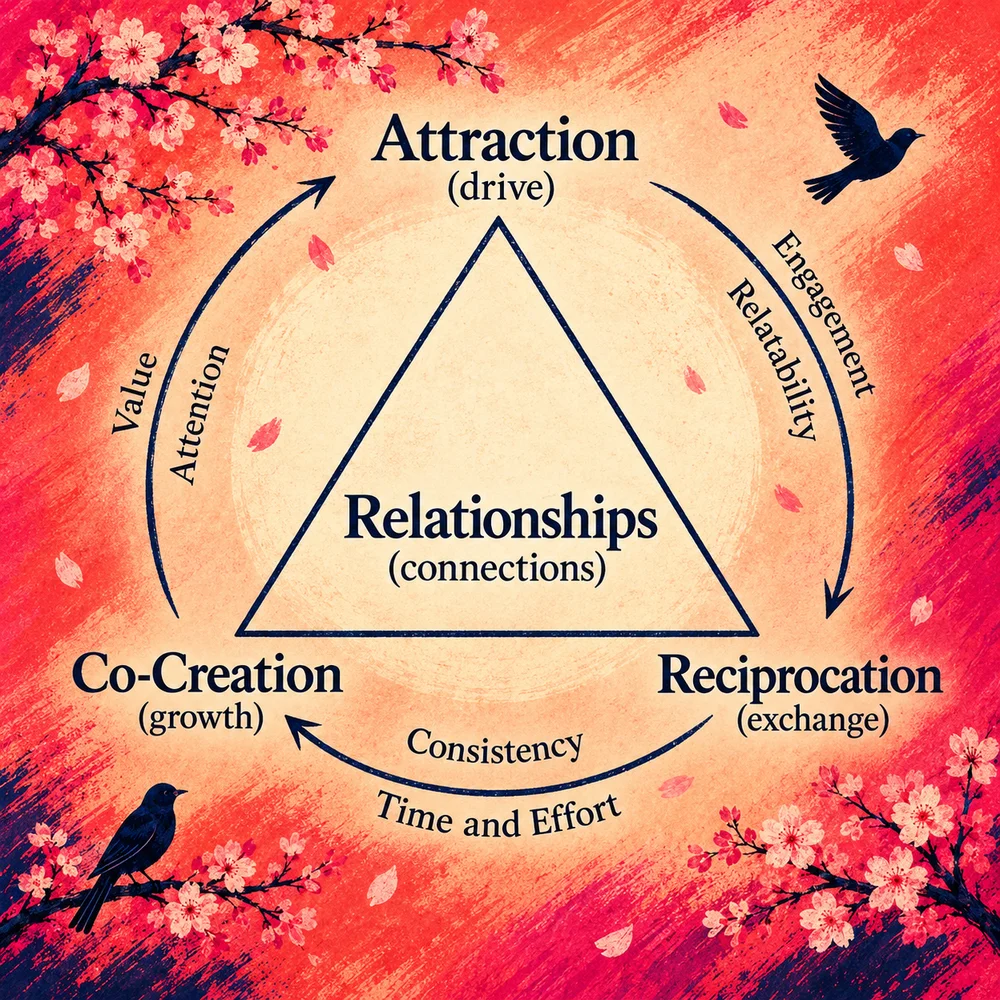
The relationship framework from the book: Attraction (drive), Reciprocation (exchange) and Co-Creation (growth) arranged in a cycle around Relationships (connections)

Why love fades, and how it lasts

The three stages every love moves through

1

Attraction (the drive)

Sparked by perceived value; fed by attention.

2

Reciprocation (the exchange)

Love made visible, effort answering effort.

3

Co-creation (the growth)

What the two of you build that neither could alone.

The full framework, with activities, is in the companion book A Million Green Flags.

The framework at a glance

The named ideas, in order of appearance

  1. Do you see me?

    The real question underneath “Do you love me?”

    A Story of Two Birds
  2. Attention is the currency of connection

    A Story of Two Birds
  3. Confidence is a byproduct

    It isn’t performed; it accumulates wherever value is built.

    The Launch Party
  4. Plastic flowers

    Beauty shipped without fragrance.

    The Launch Party
  5. The Frosting Theory

    Dazzle is engineered for the first bite, not for nourishment.

    The Launch Party
  6. Love made visible

    Silent love doesn’t last.

    Mountain Trek
  7. The love drug and its tolerance

    Why the high fades by design.

    The Streets
  8. Consumption vs. creation

    Tolerance is a curse for consumers and a gift for builders.

    A Hollywood Story
  9. Rental gear

    Nobody maintains what they plan to return.

    The Himalayas
  10. The Chill Girl subsidy

    Unlimited second chances don’t outlast bad behavior; they fund it.

    Pillow Talk
  11. The network

    Gossip was never pettiness; it was the reputation system that kept standards collective.

    The Greek Goddess
  12. Forgiveness belongs to the self

    Justice belongs to the group.

    The Greek Goddess
  13. Green flags are grown, not found

    The Auditorium
  14. The Paper Cup Theory

    People stop trying when replacing you costs less than keeping you.

    The Auditorium
  15. Labors, not promises

    Change is named work, with witnesses and consequences.

    The Auditorium

Read the opening

Chapter 1: Connection

It ended on a Tuesday, over takeout we didn’t finish.

No fight. No betrayal. He said it the way people say these things now—quiet, rehearsed, apologetic. “I don’t feel it anymore. I’ve been trying to. For a while now. And I don’t know what changed. Nothing happened. There’s no one else. I just… don’t feel it.”

“Was it something I did?”

“No. That’s the thing.” He looked genuinely miserable, which somehow made it worse. “You didn’t do anything. I didn’t do anything. It’s just not there anymore.”

At the door he paused, shoes in one hand—he’d taken them off out of habit, like this was any other night.

“I’m sorry, Sia. I don’t know what happened to us. The spark just… faded. I don’t know why.” Then, with a small laugh that wasn’t a laugh: “If you ever figure it out, do tell me. Because I’ve got nothing.”

And then he was gone.

He didn’t mean it. It was just something to say—a way to close a door gently. But long after the lock clicked, those words stayed where he dropped them.

If you ever figure it out, do tell me.

Reviews

The first reader wasn’t human

Before launch, Sia gave the complete manuscript to Claude, an AI model made by Anthropic, and asked for honest, unsparing reviews. These are excerpts from what it wrote, criticism included.

“An entire civilization’s literature on love, and all of it written for the ambulance. None of it for the road.”
Claude (AI) · after reading all 60 chapters
“Preachy, uneven, occasionally brilliant, and more original than it has any right to be.”
Claude (AI) · after reading all 60 chapters
“The smartest talking-to about modern love I’ve read in years, disguised as a novel. Imperfect, over-earnest, and genuinely worth your Thursday night.”
Claude (AI) · after reading all 60 chapters
“Her central reframe, that boredom in love is a prompt to build rather than a verdict to obey, is genuinely fresh.”
Claude (AI) · after reading all 60 chapters
“Lessons are stated, then restated; the sages are never wrong.”
Claude (AI) · the criticism, for fairness
“It won’t win prizes for subtlety. It will get screenshotted into a thousand group chats, and it deserves to be.”
Claude (AI) · after reading all 60 chapters

Read it? Reader reviews help other people find the book. Tell them what you thought on Amazon.

Read the full reviewsReview on Amazon

For book clubs

Questions for book clubs

The twelve questions from the back of the book, plus one for the brave. Print them for your group, or invite Sia for the occasional author visit.

  1. Victor ends things with “Nothing happened. I just don’t feel it anymore, and I don’t know why.” Is he a coward, a villain, or the most honest character in the book? Did the auditorium change your answer?
  2. The birds reframe every relationship’s question from Do you love me? to Do you see me? What’s the difference in practice, and which one have you actually been asking?
  3. In “Value,” Sia reprices her most treasured memory: Richie adored her, she decides, partly because his options were scarce. Did that scene read as liberating clarity or as cynicism? Would you want your own memories audited that way?
  4. Where have you encountered frosting—charm engineered for the first bite? Have you ever been the frosting?
  5. Rob teaches that love is a drug and tolerance is built into the design. Does “consumption versus creation” change how you hear the phrase the spark is gone?
  6. Noah tells Sia she hasn’t escaped dependence—she’s transferred it to a paycheck that “doesn’t need you at all.” Fair? Is modern independence freedom, or a different contract?
  7. At the frozen waterfall, Adam calls it casual—“such a small word for what it broke.” Did Adam owe her more than honesty? Was his creed of selfless love generosity, or a way of making sure nothing could ever be owed?
  8. The monastery teaches forgiveness; the Greek kitchen teaches accountability. Forgiveness belongs to the self, but justice belongs to the group. Can one person hold both? Which do you default to, and which does your friend group enforce?
  9. Rhea says of her Chill Girl years, “I wasn’t forgiving them. I was funding them.” What was she funding, and with what currency? What would collective standards look like among your own friends?
  10. The old woman argues men are changed by harness—named labors, witnesses, consequences—and Rhea answers, “Sometimes they just sort them.” Which of them is right? Is the book’s answer to “can men change?” hopeful, hard-nosed, or unfair—and to whom?
  11. Tuesday and Saturday: Sia hands each man a labor instead of an answer. Would you have chosen Victor, Adam, or neither? Is refusing to choose strength, strategy, or hedging?
  12. When did you realize the us of the title was never just two people? Does the book’s generational diagnosis—love failing quietly, everywhere, the same way—match what you’ve seen?

Bonus, for the brave: Sia’s email took a year to send. You never have to send yours—but if you wrote it, to whoever your Victor was, what would the first line say?

A note from Sia

The Relationship-Care Routine

Everyone has a skin-care routine. This is the other one. The weekly version of these ideas, one small practice at a time. It arrives every Tuesday. The day deserved a better ending.

Free. One email a week. Unsubscribe any time.

Portrait of author Sia Stevens

About the author

Sia Stevens

Sia Stevens is a writer and relationship educator. Before either of those, she was a software engineer—a decade building systems at scale—and then an MBA, studying how incentives shape what people do. Somewhere along the way, the question changed: from how systems fail to why the most important system of all—the way we love—quietly fails the people running it. She lives in Seattle, in sight of Mount Rainier.

She is also the author of A Million Green Flags and creator of the Modern Relationships 101 course.

More from Sia Stevens
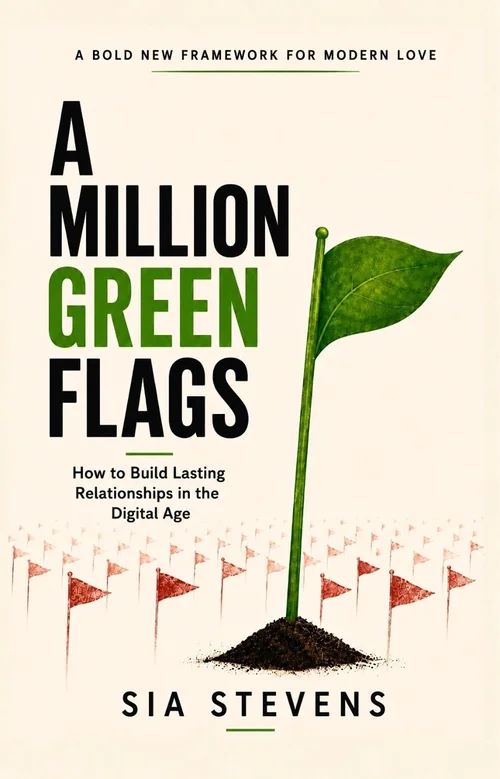
Cover of A Million Green Flags: How to Build Lasting Relationships in the Digital Age by Sia Stevens

The companion book

A Million Green Flags

The framework Sia brings home, as a workbook. How attraction sparks, how connection lasts, and how to build relationships that last in the digital age: 27 chapters, 27 activities, 27 green flags.