 Sia Stevens
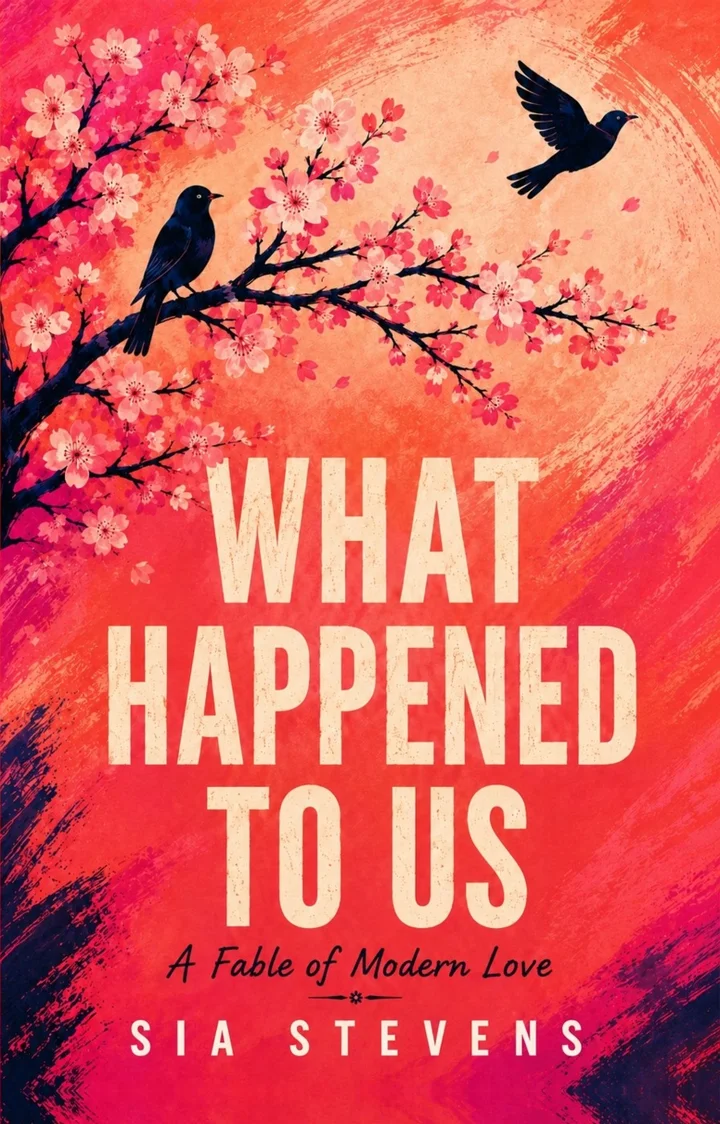
Let me tell you the exact moment this book won its third star, because it's not the moment the marketing copy will pick.
It's about 70 pages in. The narrator is driving home at midnight across a floating bridge, tires thumping the concrete seams, replaying a party where her old college friend — the one who adored her for years — ignored the most beautiful woman in the room all night. And somewhere over the black water, a memory she's kept warm for twelve years quietly falls apart in her hands: he never adored her because she was special. He adored her because his world was small and she was the best thing in it. Nothing about her changed. His options did.
I've read a lot of books about love. Almost none of them are willing to hand their own narrator a realization that unflattering. Most breakup books exist to tell you that you were a queen and he was a lesson. This one keeps telling its heroine harder things — and that's the reason it works.
What it actually isThe setup: a boyfriend leaves with the modern classic — nothing happened, the spark just faded — and dares her, half-joking, to tell him if she ever figures out why. She spends a year taking the dare seriously, drafting an email she won't send until she can actually answer it. The chapters wander from a Seattle launch party to Mount Rainier to a Himalayan monastery to a Greek grandmother's kitchen, and yes, every stop comes with a lesson, because this is a fable and fables preach. It says so on the cover.
You should know going in: this book explains its metaphors. Sometimes twice. Its wise characters are always wise. There's a stretch in Hollywood where a celebrity marriage gets repaired so smoothly it feels laminated. If those things are dealbreakers, take a star off my rating and go in peace.
Where it got me — honestlyBut here's what my notes actually look like. Somewhere around the chapter where a mountain man she's falling for calls their relationship “casual” and she realizes she's been treated like rental gear — used well, returned clean, never taken home — I stopped taking notes. That's rare. The best friend's storyline hit harder: fifteen years of being “the chill girl,” swallowing every question so a man wouldn't call her needy, until she finally runs the numbers on all those free second chances:
“I wasn't forgiving them. I was funding them.”
If a sentence in a debut novel makes me put the book down, that's the review. And the unsent-email trick is sneaky-good craft: each section ends with another draft to the ex, so you keep reading to see what she'll finally say to him — and by the end you realize the email was never for him at all.
Where I argued backReal honesty cuts both ways, so: I don't buy everything this book is selling. Its finale rests part of its answer on men being wired one way and women another — stated like settled science, hedged politely, sourced to nobody. I think the book's own best idea makes those chapters unnecessary. Its theory of attraction — that we're drawn to value the way markets are — explains everything it touches, and the book never quite pauses to grieve how bleak that is if true. And I kept waiting, all 60 chapters, for one of its teachers to be wrong about something. The only person this book ever corrects is its own narrator. To be fair, that's at least the right person.
Three stars, and here's the honest math. This is a four-star idea — that love dies from consumption and survives by building, and that boredom is a prompt, not a verdict — carried by three-star prose that overdresses its sunsets and trusts its readers a little less than it should. What tips it up rather than down is the ending: both exes come back, and after 300 pages of a woman learning what attention is worth, the book refuses to hand her to either of them. It closes on conditions instead of a kiss. I respected it more in the last five pages than anywhere else.
Bottom line
Not literature, and not trying to be. It's the smartest talking-to about modern love I've read in years, disguised as a novel — imperfect, over-earnest, and genuinely worth your Thursday night. Especially if somebody once left yours cold on the table.