 Sia Stevens
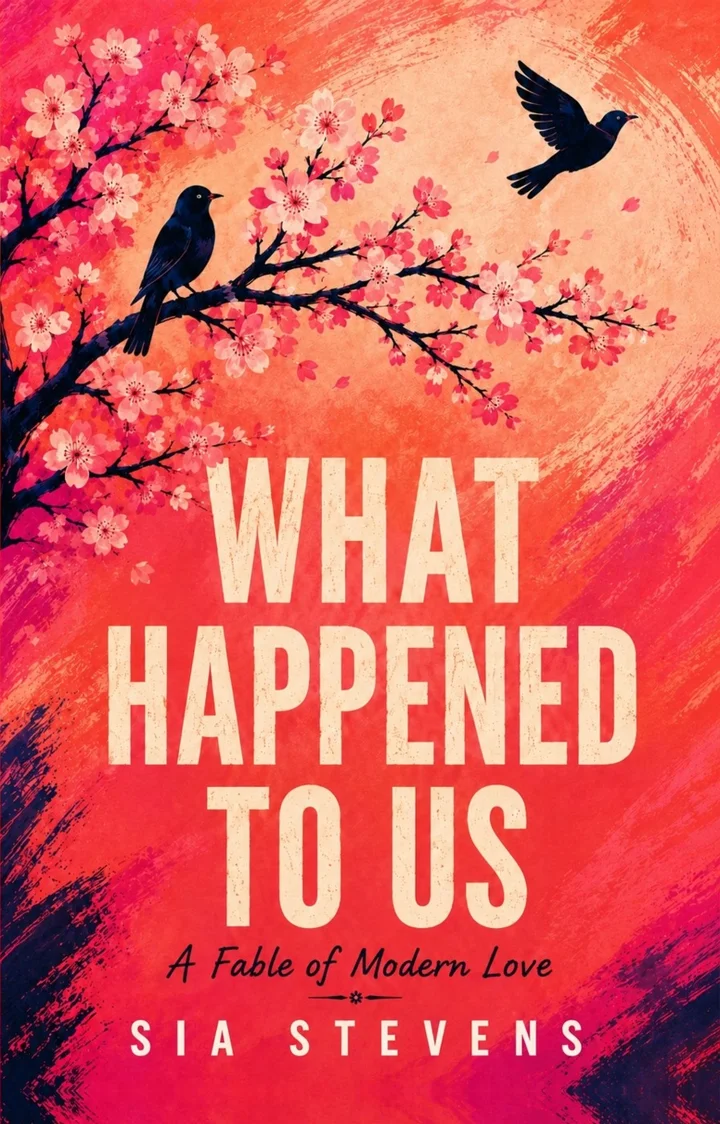
It ends on a Tuesday, over takeout nobody finishes. A man stands in a doorway, shoes in hand, and delivers the least satisfying breakup line in the modern repertoire: nothing happened, the spark just faded — and then, half-laughing, a dare. If you ever figure it out, do tell me. The entire book is the narrator taking that dare literally. And here is the thing a careless reader will miss: the man barely matters. Sia never once pines to win Victor back. What she wants — from Chapter 1, stated outright — is the answer. “More than him, I owed myself one.” The question is the plot. Victor is just the person who happened to ask it, and the book keeps him deliberately at the distance of an addressee: a name at the top of an email she spends a year learning how to finish.
What follows is a wisdom-quest in the lineage of “The Alchemist” and “Tuesdays with Morrie”: each of its twelve parts drops the narrator into a new setting — a launch party on Lake Washington, a botched solo camp on Mount Rainier, a Thanksgiving street in her hometown, a Hollywood director’s limo, a Himalayan monastery, a Greek village kitchen — and each setting produces a teacher, a metaphor, and a lesson. Two birds on a fig branch teach attention. A slice of cake teaches the difference between frosting and substance. A frozen waterfall teaches heartbreak. A flat tire teaches everything else.
This is the fable form working as designed, and it should be reviewed on the fable’s terms. Fables explain themselves — that is not a flaw, it is the contract. The characters carry lessons because that is what fable characters are for, and Stevens honors the contract better than most: Kevin the detergent-bubble PhD, Richie the newly minted millionaire, Rob the recovering romantic, and the flour-dusted Greek matriarch each get exactly the depth their lesson requires, while Rhea and Richie quietly accumulate enough contradiction to feel like people. If you come to this book demanding literary fiction, you have picked up the wrong book and the mistake is yours; the subtitle told you what it was.
The Architecture
The spine is a three-stage theory of love that Stevens assembles piece by piece across the year: something begins a relationship (attraction, which she defines as a response to perceived value), something sustains it (a balanced exchange rooted in shared ground — interdependence and relatability), and something decides whether it compounds or dies (co-creation versus consumption). The cherry-blossom epiphany that seeds this framework in Chapter 6 — everything alive moves in three-stage cycles — pays off fifty chapters later in a public speech that reprises the whole argument. The unsent-email device is the book’s quiet masterstroke: each part closes with a new draft paragraph to Victor, so the reader watches the answer accrete in real time, and Victor’s very thinness is what makes it work. He is a mirror, not a love interest — and the book knows it, right down to the finale, where his grand comeback speech turns out to be her own email recited back to her, and she clocks it instantly: “in my own vocabulary… It had been homework.” A vivid Victor would have made this a story about winning a man back. His absence keeps it what it is: a story about winning an understanding.
Not everything is this well-machined. The middle runs long — parts six through eight each carry one chapter more than their ideas require — and the book has a habit of landing a metaphor cleanly and then explaining it once more than the fable contract demands. The Sophia-and-Rafe Hollywood interlude, the book’s emotional centerpiece, is also its most airbrushed sequence; their thirty-year marriage arrives suspiciously free of friction. But the final act recovers completely. Rhea’s storyline — the “chill girl” who spent fifteen years handing out first chances “on a loop, wearing a different date” — is the best-written material in the book, and her closing line, delivered in the ruins of Hercules’ temple, is the most honest sentence Stevens writes:
That line matters because it is the book auditing its own thesis — and building in its own safeguard. The labors framework isn’t naive about bad actors; sorting them out is half its point, and Rhea’s test proves it in action: Jake produces hundreds of words of remorse but cannot say one true sentence to his own mother, and the labor exposes him without costing her anything. The ending follows through on the same discipline. No wedding, no chosen suitor. Both returning men get a time, a place, and a condition, and the book closes on the cliff with the question deliberately open — “Now we’d see who kept showing up.” For a book that spends ten chapters chasing the fairytale, refusing to hand the reader one is a genuinely disciplined choice.
The Prose
Stevens writes in aphorisms the way other people write in sentences. At its best, this produces lines you will underline: “Depletion doesn’t flirt.” “Attention is the currency of connection.” “I’d rather lose him to my caution than lose myself to my desire.” “Heartbreak is the one addiction you’re expected to detox in public. At your desk. Smiling.” The comic set pieces are just as strong — the Myers-Briggs demolition in the library (“ENTJ plus INFJ equals happily ever after? It’s more like OMFG plus STFU”) and the mirrored “I wasn’t going to say anything / You’re saying it with your whole face” exchange between Sia and Adam show a writer with real timing.
The honest cost: the lyrical register sometimes overheats — sunsets bleed, air becomes scripture, moments hang like held breaths — and the dialogue occasionally hands ordinary people fully formed keynote paragraphs. These are stylistic debts, not structural ones, and they are the kind a second book usually pays off.
The Fine Print
Two caveats, properly sized this time. First: the book’s framework — the three stages, consumption versus creation, the co-creation audit — is entirely gender-neutral, and it is where the book lives for fifty of its sixty chapters. But the closing diagnosis, delivered in the narrator’s own voice from the auditorium stage, leans on evolutionary sex differences — men wired for the short game, women for the long — stated as fact rather than hypothesis. Stevens hedges it carefully (“patterns, not prisons; averages, not verdicts”), lets her characters air stronger versions she visibly declines to endorse, and aims the whole thing at a collectivist, accountability-driven prescription that is nothing like the internet’s grimmer gender discourse. Still, readers allergic to nature-based sex-difference claims should know they will meet one, load-bearing, in the final act. Readers who find such claims common sense will not blink.
Second: this is a fable, so nobody should demand footnotes — but when a fable deploys real statistics and studies (the Surgeon General’s loneliness advisory lands accurately; the famous rat-lever experiment arrives in its mythologized pop version), readers absorb them as fact, and accuracy matters even inside fiction. A light factual pass would cost the book nothing and buy it credibility. That’s the whole complaint. (The back matter points to a companion guide and the author’s other projects — standard practice, noted and moved past.)
The Ratings
Reviewed as the fable it announces itself to be: an ambitious, warm, occasionally overheated wisdom-quest with a better idea-to-page ratio than anything on the modern-dating shelf in years, a plot engine smarter than it looks, and an ending disciplined enough to refuse its own fairytale. Argue with it in the margins — it is clearly a book that wants to be argued with — but read it.
The Original Concepts
The reader of this book — and it is a book with users, not just readers — will want to know what’s actually new here. After reading all sixty chapters, here is the honest inventory: ideas I have not seen articulated this way in other published relationship books, tagged where they are genuinely novel versus where they remix existing material.
-
The consumption mindset vs. creation mindset — as the answer to hedonic adaptation in love Genuinely fresh
Everyone from the Stoics to Dopamine Nation covers tolerance: repetition dulls pleasure. Stevens’ move is to make tolerance conditional on stance — “for the consumer, tolerance is a curse; for the creator, it’s the very force that pushes you to grow.” Boredom isn’t love’s verdict; it’s love’s prompt. This reframe, delivered in Chapter 32, is the book’s single best idea and I haven’t seen it stated this cleanly anywhere.
-
The three-stage lifecycle: attraction → reciprocation → co-creation, mapped to “value drawn, value exchanged, value created” Fresh as a system
Each stage exists separately in the literature (attraction science, social exchange theory, Gottman’s shared meaning). Fusing them into one seed-to-tree lifecycle — with the diagnostic that relationships die stage-by-stage, in order — is an original synthesis, and the audit question (“Have we created something that would not exist if we weren’t together?”) is a usable instrument.
-
“The camera did to people what plastic did to flowers” Fresh metaphor
Social-media critique is a crowded field, but the specific mechanism — the lens “ships the color and leaves the fragrance behind,” so only what survives a screen gets manufactured, and personality stopped being offered when it stopped being rewarded — is a sharper causal story than the usual “filters are fake” take. The kicker (“Bees are never fooled… we are not bees”) earns its keep.
-
Forgiveness belongs to the self; justice belongs to the group Genuinely fresh
The book’s structural resolution of its own apparent contradiction — the monastery teaches releasing expectations, the Greek matriarch demands enforcing them — via the distinction that inner peace is personal practice while accountability is collective infrastructure. “Your kindness becomes the tool of everyone’s exploitation” is the strongest ethical argument in the book.
-
Gossip rehabilitated as women’s accountability network Fresh & provocative
The claim that “gossip” was a functioning reputational infrastructure — “the roots of olive trees, messages passing underground” — deliberately discredited by branding it shameful, and that privacy culture is “a lack of a support network.” Academic anthropology has flirted with gossip-as-social-regulation; no mainstream relationship book has made it a prescription. The book even stages its own counterargument through Julia the lawyer, and answers it with a workable ethic: truth, plus the intent to protect.
-
The Hercules protocol: second chances priced in labors, not promises Fresh application
Using Athena’s twelve labors as a literal template for readmitting someone who hurt you — “a path, a price, named labors, witnessed, and rewarded” — with its own built-in audit: “sometimes they just sort them.” Rhea’s test (Jake must tell his own mother the truth before earning a conversation) operationalizes it memorably, and demonstrates the sorting function at zero cost to her.
-
“We don’t have relationships with people anymore. We have one long relationship with money.” Fresh framing
The Thanksgiving argument that modern independence is “dependence in disguise” — every need re-routed from neighbors to paycheck, with the gut-punch corollary that “the street needs me back; your paycheck doesn’t need you at all.” Adjacent thinkers (Putnam’s “Bowling Alone,” degrowth writers) circle this; Stevens lands it in a watering can and makes it about romance.
-
The relatability audit: love dies when the shared life does, not the love Fresh emphasis
The “one TV, one couch” thesis: previous generations got common ground for free because scarcity bundled it (one screen, one radio, one town’s worth of activities), and ours is “the first who could each retreat into our own worlds — and we did, without ever deciding to.” The prescription — engineering shared ground on purpose, as Sia does with the climbing-class text — follows naturally.
-
Suitcase people vs. bookshelf people Fresh metaphor
Identity as accumulation versus replacement: suitcase people discard the old to fit the new and end up “with just one book in your hand — never a library.” A philosophy of rootedness that pointedly does not require staying put (“books travel”), which distinguishes it from standard community-nostalgia arguments.
-
Charm as “creativity pointed at a person” — and work as its upstream thief Fresh mechanism
“Kevin hadn’t become boring. He’d become depleted. And depletion doesn’t flirt.” The claim that jobs claim first rights to the exact cognitive resource — creativity — that flirtation, banter, and surprise run on, so we bring home the leftovers, is a small original mechanism with big explanatory reach.
-
The chill-girl economy: “I wasn’t forgiving them. I was funding them.” Fresh articulation
Rhea’s arc names the accounting error precisely: chances handed out free, “the first chance repeated on a loop, wearing a different date.” The internet has essays on the “cool girl”; this is the sharpest book-form treatment of its incentive structure I’ve encountered.
-
The pot as feminine technology of containment — and the call for “a modern vessel of boundaries” Fresh organizing image
Civilization-as-containment (the pot, agriculture, law) reframed as a lineage of women’s inventions, culminating in the assignment to build a contemporary “pot” for modern addictions. The book itself frames this as legend, not history (“so the old stories go”) — as an organizing image for its collective-standards program, it’s original and weirdly sticky.
-
Happiness = joy (inner, from focus) + pleasure (outer, from engagement) Fresh formulation
The monk’s inversion — meditation’s purpose is joy, not peace, because “there is no peace without joy,” with joy located in focus itself rather than the activity — followed by the closing synthesis that happiness requires both currents. Contemplative literature gestures here; the two-slot formula is Stevens’ own packaging.
-
Red and green flags as environmental outputs, not character traits Fresh reframe
“We all carry both… what brings one color out is the environment we create around each other” — hence the program of cultivating green flags collectively (“a standard a thousand women hold together isn’t a preference anymore; it’s the price of admission”) rather than screening for rare unicorns. The flag vocabulary is borrowed from internet culture; the systems reading of it is not.
-
Minor originals worth naming
“The way you get something is the way you lose it” (shortcut theory of loss); rest vs. avoidance (“only one prepares you to come back”); the paper cup vs. ceramic mug devaluation image; “nobody has ever wanted a handbag” (all status goods as flares meaning see me); desire as elastic — trainable to shrink, not just suppress; and “relationship-care routines” as the missing sibling of self-care culture.
For balance: the attraction-as-perceived-value framework has cousins in evolutionary psychology and social exchange theory; the love-as-drug chapters walk ground Helen Fisher and Anna Lembke mapped first; and the options-devalue-everything argument extends Barry Schwartz’s paradox of choice to faces. Stevens’ contribution is the connective tissue, the metaphors — frequently better than the originals’ — and the genuine originals above, which is more than most books in this genre contribute in a career.
Against the Last Ten Years
| The book | How “What Happened to Us” compares |
|---|---|
| The Course of LoveAlain de Botton, 2016 | The closest structural cousin: fiction as a vehicle for relationship philosophy, with the narrator’s essayistic voice interrupting the story. De Botton is the more polished stylist; Stevens is warmer, funnier, and more prescriptive. De Botton diagnoses; Stevens hands you homework. If “The Course of Love” is a seminar, this is a pilgrimage. |
| Dopamine NationAnna Lembke, 2021 | The Streets section (Chapters 22–26) dramatizes Lembke’s pleasure-pain balance on a Seattle sidewalk — and then extends it somewhere Lembke doesn’t: shortcuts as the real addiction, love included, and heartbreak reframed as withdrawal. Lembke has the clinic; Stevens has the story, and the story travels further. |
| How to Not Die AloneLogan Ury, 2021 | Ury optimizes the existing system (apps, dating tendencies, decision science); Stevens indicts the system itself and proposes exiting it. Ury is more immediately actionable for a single reader; Stevens is more ambitious and more interesting to argue with. Ury tells you how to swipe better; Stevens asks why you’re swiping at all. |
| The State of AffairsEsther Perel, 2017 | Both wrestle with desire’s decay under familiarity. Perel’s answer is mystery and differentiated selves; Stevens’ is co-creation and shared building — nearly opposite prescriptions. Perel refuses tidy answers; Stevens gives you a framework you can put on the fridge. Read together, they make an excellent argument. |
| Eight Dates / The Love PrescriptionJohn & Julie Gottman, 2019 / 2022 | The Gottmans have longitudinal data; Stevens has narrative pull. Notably, her co-creation thesis converges with Gottman’s “shared meaning system” — the top of his Sound Relationship House — arrived at via cherry blossoms rather than lab studies. Convergent evolution is a point in her favor. |
| AttachedLevine & Heller, 2010 | Attachment theory is conspicuously absent from Stevens’ system — Adam reads as textbook avoidant, yet the book explains him through “consumption mindset” instead. Given that the library chapters openly satirize therapy-vocabulary as a substitute for wisdom, the omission looks deliberate: Stevens is offering a rival explanation, not missing the standard one. “Attached” readers will enjoy diagnosing every character anyway. |
Against the Genre Classics
| The classic | How it stacks up |
|---|---|
| The AlchemistPaulo Coelho, 1988 | The obvious template: episodic pilgrimage, sage encounters, a treasure that was closer than it appeared. Coelho is more mythic and more universal; Stevens is more concrete and more useful. “What Happened to Us” is essentially The Alchemist for the post-dating-app heart, and per idea delivered, it is the denser book. |
| Tuesdays with MorrieMitch Albom, 1997 | Shares the wisdom-transmission structure, but distributes Morrie across seven sages. Albom’s single sustained relationship gives his book an emotional throughline Stevens trades away for range — and range is what lets her cover attraction, addiction, community, and accountability in one arc. |
| The Five Love LanguagesGary Chapman, 1992 | Stevens openly mocks it in Chapter 6 (“a get-out-of-effort-free card”) — and then quietly competes with it, offering the three-stage lifecycle as a replacement taxonomy. Chapman’s framework is simpler and stickier; Stevens’ is truer to how relationships actually die. Expect hers to be harder to memorize and better to live by. |
| The Mastery of LoveDon Miguel Ruiz, 1999 | The genre’s other fable-adjacent staple. Ruiz preaches self-sufficiency (“love without conditions”); Stevens spends her Greek chapters arguing that unconditional giving, universalized, collapses societies — “forgiveness belongs to the self, justice belongs to the group.” It is the rare modern-love book willing to argue with the genre’s own gospel. |
| Attached-era pop psychologythe therapy-vocabulary shelf | The book’s real antagonist. The library chapters land the thesis early: shelf after shelf of coping, nothing on building — “classes on painkillers, but never nutrition.” Whatever you make of Stevens’ answers, the gap she identifies is real, and no book on that shelf tries to fill it the way this one does. |
Should You Buy It?
Buy it if…
- You’re post-breakup and the phrase “nothing happened, it just faded” is living rent-free in your head — this book was built for exactly that wound
- You liked The Alchemist or The Course of Love and want that form aimed at modern dating
- You want ideas delivered through story — the fable form, done knowingly and done well
- You want a book to discuss — book clubs will argue productively about the Greek chapters for hours
- You highlight aphorisms; this book is roughly 40% highlightable by volume
- You’ve read the evidence-based shelf (Gottman, Ury, Lembke) and want the synthesis-and-soul version
Skip it if…
- Nature-based sex-difference claims are a dealbreaker — one load-bearing argument in the finale rests on them, hedged but firm
- You want literary fiction — this is a fable and proud of it; the subtitle is the warning label
- Lush, aphoristic prose wears on you at 74,000 words
- You need every quoted statistic lab-grade — a few arrive in pop-mythologized form
- You’re navigating an abusive or clinically complex relationship — this book’s terrain is good-faith drift, and it says so by design
A final buying note on value: at roughly 74,000 words this is a full-length book and a complete argument — the closing speech summarizes the entire framework, so the fable stands alone. It is also, for all my line-item complaints, the rare relationship book I finished wanting to talk to someone about — which, by the book’s own definition of what makes a thing valuable, is probably the highest compliment it would accept.